










The benefits of IoT in the education sector

How fibre can help benefit your SME
November 22, 2019
How to boost your office Wi-Fi
November 29, 2019

The education sector used to be primarily a world of blackboards and textbooks. But of late, more and more educational institutions are harnessing the power of technology to streamline processes, make teaching more effective, and deliver a better learning experience. From migrating to the cloud, online course material,administrative software, and even wireless internet connectivity — there’s no denying that schools, colleges, and universities are embracing a digital future.
Considering these upgrades, it stands to reason that the educational sector is ready to become an active adapter of the Internet of Things (IoT) and take their digital transformation to the next level. One of the most important components of this disruptive shift is the ability of the internet, connected devices, and analytics to work together to provide more intelligent solutions to students, teachers, and parents than humans alone can offer.
What exactly is the Internet of Things (IoT)?
Without a doubt, in recent years the Internet of Things has emerged as a new favourite buzzword when talking about the fourth industrial revolution. And whilst a number of industries are yet to adopt the technology, and smart home devices are already available mostly to high-end customers, the IoT market is maturing at a steady rate.
For many people, it’s a concept that still requires explanation. The easiest way to describe the IoT is to say that almost everything in the world will eventually be connected to the internet. This goes beyond computers, tablets, and smartphones. More and more physical objects all around us will be equipped with sensors, software, and network connectivity that enable them to send and exchange information over the internet and respond to instructions. For detailed insights, read our article “The Internet of Things and Why You Should Care.”
As far as the reach of the Internet of Things, HP did a study on the rise of connected devices over the years and discovered that there are over ten billion devices that can currently connect to the Internet. They also estimated that by 2025, the number of connected devices will have reached 1 trillion (via Analytics Vidhya).

The potential of IoT in the classroom
Traditional teaching methods are used to over-relying on pre-planned lessons, mostly comprised of text written on a blackboard. The drawback of this is that it doesn’t leave much room for flexibility or creativity. With the advent of IoT enabled smartboards, teachers can deliver an optimised learning experience whilst presenting their lessons in a more engaging way. With the aid of Augmented Reality (AR) and Virtual Reality (VR) technologies, lessons can become even more stimulating.
Imagine having the ability to pull up a demonstration when a student asks an unexpected question that’s not covered in the teacher’s worksheets. Teachers might be doing a lesson on condensation and suddenly find themselves having to answer a question on why the sky is blue. With devices like Amazon Alexa or Google Assistant, the teacher can be more responsive to inquisitive minds. He/she can then ask her smart device to pull up a quick video explaining how sunlight interacts with our atmosphere.
IoT technology makes it easier for teachers to keep tabs on their students. They can use student performance data to continually evaluate how effective their teaching is and take a more informed instructional approach.
Students can connect with their teachers and receive learning instructions and reports even when they’re not in the classroom. For example, a student that’s off sick doesn’t have to miss out on important lessons or get homework from their friends. With the help of the Internet of Things, a teacher can use digital pens and interactive whiteboards to display information on the student’s connected tablet in real time, making it possible for their students to be instructed wherever they are.
The IoT also has the potential to improve administrative systems and processes. Those who handle office duties at educational institutions stand to benefit from the automation of tasks such as compiling reports, printing documents, schedule making, and answering the telephones.
Student safety
The IoT can provide effective support in student safety measures. By integrating IoT with authentication access control systems, schools can capture attendance, which can notify the teacher which students are present or absent. It will also enable schools to track the whereabouts of learners on the playgrounds any time, so should an emergency occur, it will be easier to locate them.
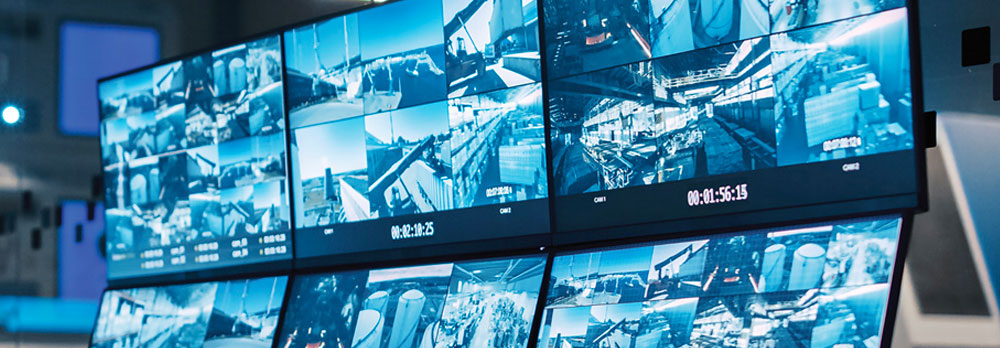
The IoT can further enhance basic video surveillance measures. One example is facial recognition technology, where the cameras identify unfamiliar visitors, then automatically sends an alert to administrators, or, the police with the trespasser’s exact location. During such emergency situations, IoT can enable a lock down of the campus. Administrators can secure gates wirelessly via the internet within seconds.
Summary
The rise of the Internet of Things (IoT) marks an exciting new era in the educational landscape, bringing with it the promise of revolutionising educational tools and greatly improving teacher and student outcomes.